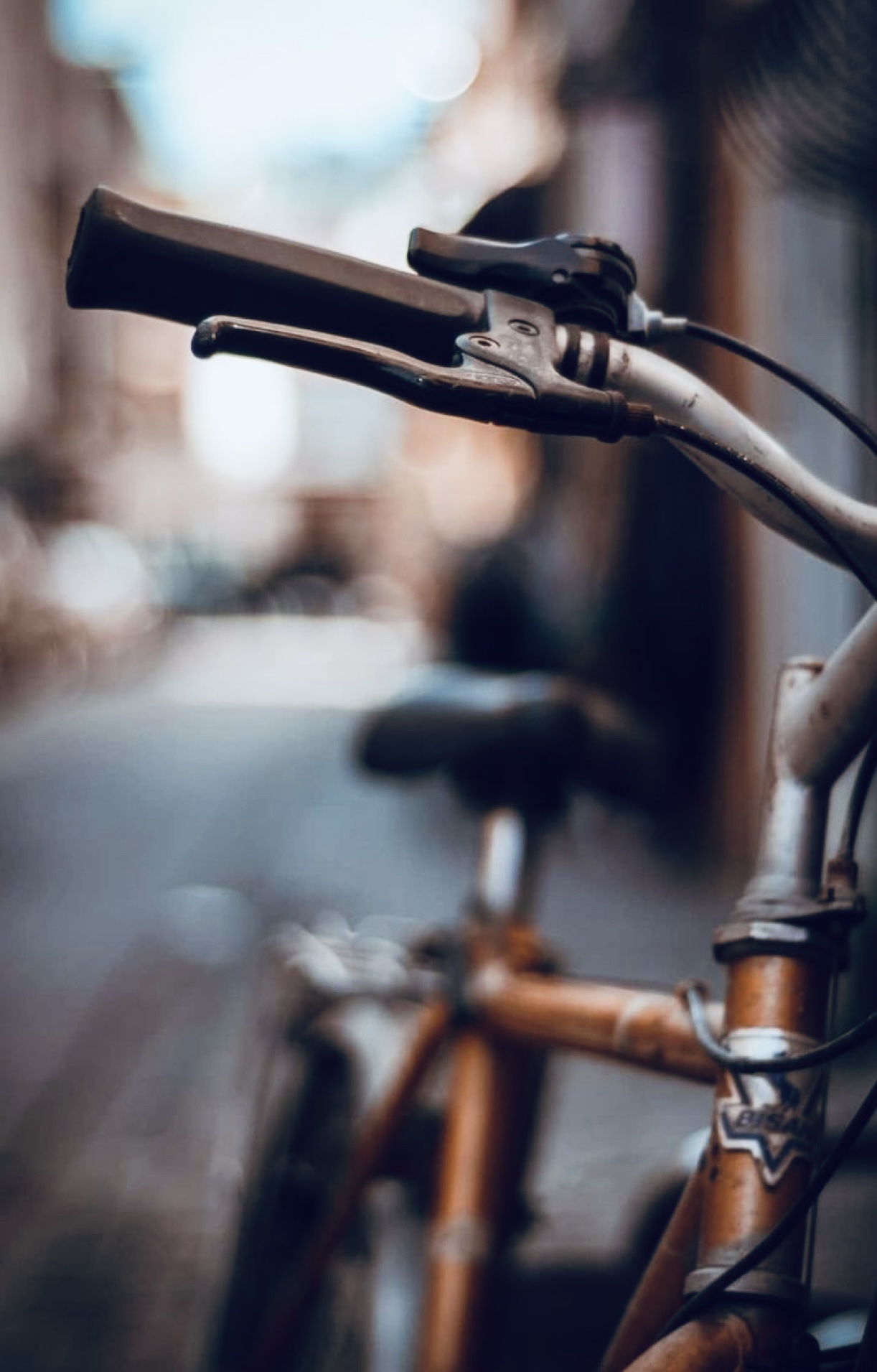
Once, the word home meant something. It was a narrow bitumen lane ending at a two-storeyed house with fading paint and damp patches blooming on its walls after every monsoon. It was the bicycle on the car porch with a flat tyre, more often than not, leaning tiredly against the moss-darkened pillar. It was the cool green mosaic floor under my bare feet during power cuts, the distant hum of ceiling fans spinning through humid afternoons, the smell of jackfruit ripening in the storeroom, the pressure cooker’s whistle calling out from somewhere deeper inside the house.
Back then, everything felt contained. The word homepointed neatly to this place, these sounds, this air. The schoolyard dust. The gossiping neighbours. The temple bells carried by the evening wind. Even the seasons had their fixed rhythms; festivals spilling colour into streets that would return to their quietness, rains flooding the lanes before retreating, summers pressing down with a heat that slowed time itself.
I thought words were like this too. Clear. Stable. Permanent.
But time does not keep its promises.
Somewhere along the way, the edges began to dissolve. First, I left the lane. Then the town. At first, I thought it was only a change of addresses, an exchange of walls and roads. I did not realize that every move takes more than belongings. It strips away definitions, quietly, without ceremony, until one day you notice that the word home no longer points anywhere certain.
Patna gave me its dust and its restless chaos, the cramped lanes where conversations tangled like wires, the smoky sweetness of chai on winter mornings, the still, wide breath of the Ganga at dusk. Kolkata taught me to move differently, slower, in step with its tramlines rattling across forgotten streets, its rain-heavy evenings swelling with damp nostalgia, its poetry breathing inside shadows of fading colonial facades. Dubai added another layer entirely; a city of glass and heat, where ambition climbs faster than memory can follow. The air smelled faintly of metal and sand. Nights shimmered with artificial stars, while the desert waited just beyond the edges, patient and endless. Dubai gave me transience, a kind of weightless impermanence, as if belonging were something too fragile to survive there.
And then there was Chennai. The city did not welcome me so much as swallow me whole. Its air was salt and sweat, heavy with the weight of monsoon clouds that never arrived on time. The traffic roared like a living organism, relentless and impatient. The Marina stretched wide and infinite, a horizon that dissolved into the kind of sea that refuses to be claimed. Temples murmured chants in languages older than memory, echoing like something carried in the blood even when you cannot understand the words. Chennai felt less like arriving somewhere and more like dissolving into something larger than yourself.
Each city added to me. Each city took something away.
Now, when I try to speak of home, the word splinters in my mouth. A bit of Patna. A bit of Kolkata. A bit of Chennai. And still, always, the small town in Kerala where it began. But these fragments no longer fit into one shape. There is no single doorway I can step through and return intact. No street where my footsteps find their echoes.
This is what time does. It makes us porous. It dissolves the certainties we once carried like talismans. Words we thought eternal shift beneath us like sand. Childhood. Belonging. Home. They survive, but their meanings fray, unravelling quietly, until we are left holding syllables stripped of the weight they once carried.
Sometimes, I try to summon the lane as it was. The bicycle with its tyre forever sagging. The vendor’s call breaking the lazy afternoon. The sun slanting across the porch in a way that made shadows feel alive. But memory is not a photograph. It is water. The harder you cup your hands around it, the more it slips through. What remains is half-remembered, half-invented, a collage stitched from fragments that no longer fit.
Perhaps that is why I no longer know what home is. It is not geography anymore. It is not a town or a house or even a fixed constellation of people, because people drift, and cities change, and time carries everything forward whether you are ready or not. Home has become softer, harder to hold, like breath on glass.
And this is the quiet undoing of growing up. The more places you belong to, the less you belong anywhere. The more words you carry, the less they mean. What was once solid erodes into questions. The streets of my childhood no longer know me nor the house or the bicycle. And yet, somehow, they all live inside me, weightless and heavy at once.
Perhaps we are not meant to stay whole. Perhaps we are meant to scatter, leaving behind pieces of ourselves like shadows cast in different directions. Perhaps belonging is not a place you arrive at but the quiet act of carrying every place forward, layered upon each other until identity itself becomes sediment.
I do not search for home anymore. I inhabit its dissolving. And in that space between remembering and forgetting, between leaving and carrying, there is a strange, fragile peace.
Because maybe home is not something we find. Maybe it is what we lose; and keep losing; until what remains is only what we carry inside.
Comments
Post a Comment