They asked for a measurement.
As though violence were a liquid you could pour into a beaker and mark with a felt pen: this much violation, that much forgiveness. As though dignity came in gradients. As though a woman’s body were a spreadsheet where trauma could be ranked, sorted, and moderated.
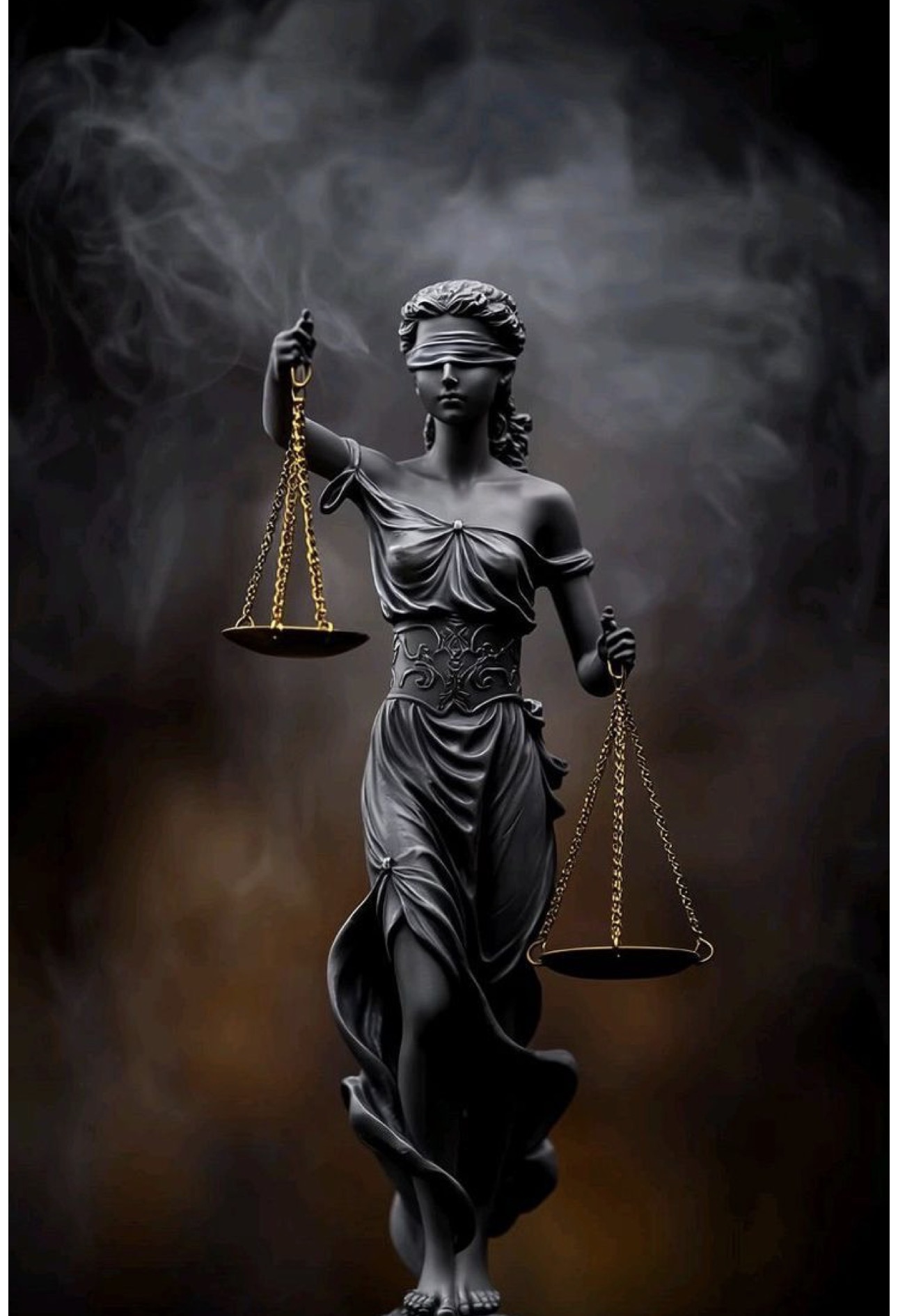
Justice, it seems, is no longer blind. It squints. It peers. It asks how far, how long, how deep, how loud. It asks whether the crime was complete enough to deserve outrage. Whether the wound qualifies for permanence. Whether the woman can prove she was broken sufficiently.
There is a peculiar cruelty in this arithmetic. To be harmed is not enough; one must be harmed correctly. In the right way. By the right standard. Anything less is recast as inconvenience, misfortune, misunderstanding. The body becomes a courtroom exhibit, and the soul; always inadmissible.
We have invented a hierarchy of violation. At the top, the crime we agree to condemn without hesitation. Below it, a long descending staircase of almosts and nearlies and technicalities. Each step downward demands that a woman swallow a little more silence, accept a little more blame, and thank the system for its restraint.
But the cruelty does not stop at skin.
Because justice is strangely literal. It recognises hands, but not the minds that instructed them. It punishes touch, but struggles with orchestration. The moment the fingers leave the body, accountability thins out; diluted by distance, by delegation, by plausible deniability.
I once knew a man like this. A colleague. A friend, even. He spoke casually, almost proudly, of restraint. I never intended to, he said. If I wanted to, I could have done it anytime. He said it as one might speak of power tools kept unused, or doors left unlocked by choice. What he was claiming was not innocence, but ownership. That violation existed as a private possibility, governed by his mood, his ethics, his convenience.
In that sentence lived a worldview: consent as a courtesy, not a requirement; safety as something women receive, not possess. It revealed how deeply normalised this thinking is; that a man can announce capacity for harm and expect credit for not exercising it. That the absence of violence is mistaken for respect, rather than recognised as the bare minimum of humanity.
This is the violence that leaves no bruises and produces no case files, but it shapes behaviour all the same. It teaches women to calculate risk constantly, to read tone and posture, to be grateful for restraint instead of entitled to dignity. It creates a climate where harm does not need to occur to be felt; it only needs to be imaginable.
And the law, trained to pursue events rather than ecosystems, does not know what to do with this. It waits patiently for contact, for evidence, for aftermath. It has no vocabulary for threats disguised as hypotheticals, for power exercised just enough to remain deniable.
Because once the hand is identified, responsibility conveniently ends there.
Those who planned, enabled, normalised, watched, recorded, threatened, joked, or simply allowed; they dissolve into the background. Shadows without fingerprints. Power without consequence.
And so a woman is asked to do the impossible: to prove not only what was done to her body, but how far the violence travelled beyond it. To drag invisible networks into a system that prefers single villains and clean narratives. To explain that harm does not end where contact ends.
This is how injustice survives; by isolating the act from the ecosystem that produced it.
The language remains clinical, almost polite. Degrees. Severity. Proportionality. Words that scrub the blood off the floor and replace it with footnotes. Words that turn suffering into an academic debate. Words that forget that fear does not arrive in percentages.
And so women learn early: justice is not a destination; it is an endurance test. One must survive the act, then survive the telling, then survive the interpretation. One must be composed, credible, consistent, and preferably unscarred enough to continue functioning; but damaged enough to be believed.
The contradiction is exquisite.
The system insists on proof, but distrusts testimony. It demands courage, then punishes exposure. It promises protection, but delivers calibration. It does not ask was she violated? It asks how much violation can we acknowledge without unsettling ourselves?
This is not balance. This is comfort disguised as law.
Until we abandon the obscene idea that violation has acceptable margins; and that guilt ends at the point of touch; justice will remain a negotiation rather than a right. And women will continue to stand in courtrooms; not asking for sympathy, not asking for vengeance; but asking the most humiliating question of all:
Was it enough?
Comments
Post a Comment