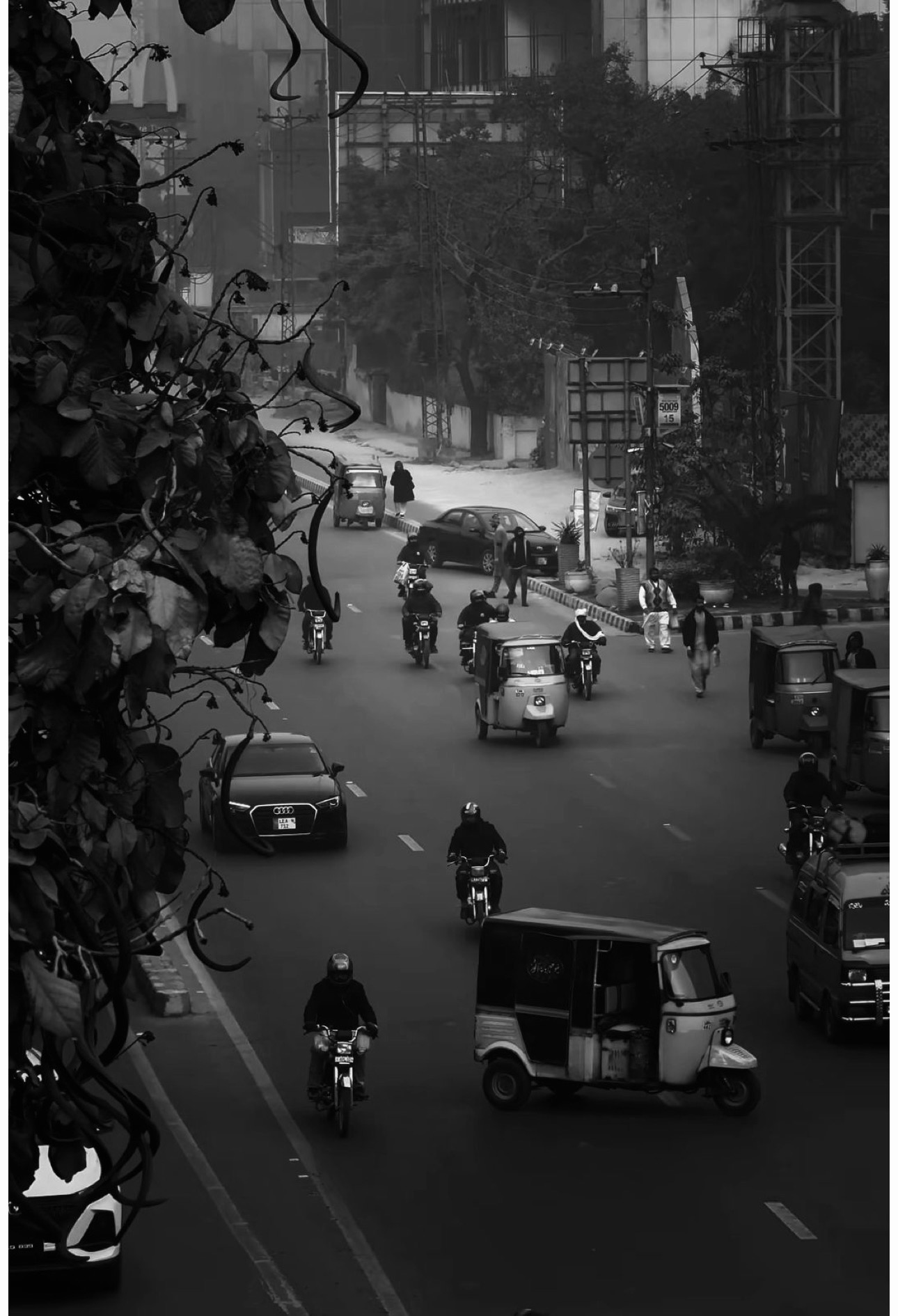
It is fashionable to say India is rising.
It is unfashionable to ask: for whom?
From a helicopter, the country looks singular. A flag. A GDP number. A skyline
that keeps multiplying like ambition on steroids. But land. Walk. Stand at a
traffic signal long enough and you will feel it; the tremor line running
through the republic.
India does not behave like one economy. It breathes in three different rhythms.
There is the India that swipes.
Glass towers, air-conditioned corridors, UPI
notifications chiming like wind chimes of optimism. This India orders sushi in
a city that still cannot guarantee piped water two kilometers away. It debates
startup valuations and weekend getaways. It funds growth. It funds aspiration.
It funds the illusion that the whole country is sprinting.
This is the consuming engine. Not large in percentage, but dense in power. A
thin crust of consumers that carries the narrative weight of 1.4 billion
people. They drive two-thirds of discretionary spending. They are visible. They
are photographed. They are studied. They are the India that capitalism
understands; because capitalism speaks fluent purchasing power.
Below them is the India that scrolls.
It consumes, but cautiously. It downloads every app. It watches every ad. It
compares prices like survival depends on it; because sometimes it does. It
wants the new phone but waits for the festival sale. It streams content but
splits subscriptions. It borrows in micro doses. It pays in installments. It is
aspirational, restless, disciplined by arithmetic.
This India is large. It is ambitious. But it is price sensitive to the point of
fragility. Capitalism courts it with cashbacks and EMIs, but cannot extract
loyalty. Luxury doesn’t land here. Margin suffocates here. This is where
startups confuse engagement for monetisation. They mistake downloads for
disposable income. They build scale on hope and then wonder why revenue feels
thin.
And then there is the India that does not swipe, does not scroll. Just stands!
It works. It survives. It calculates rice, not returns. For this India,
discretionary spending is a philosophical concept. Consumption is not a choice;
it is a negotiation with necessity. Welfare is not laziness; it is oxygen.
Markets do not seduce here. They intimidate.
Capitalism does not seep into this layer because there is nothing to extract
without destabilising life itself. The market needs surplus. This India barely
has margin for shock. One illness, one failed monsoon, one job loss; and the
structure trembles.
So what we call “the Indian market” is actually a narrow plateau resting on a
vast base that cannot yet participate in the theatre of choice.
The real fracture is not demand. It is distribution.
Income pools at the top like monsoon water trapped in a poorly graded road. It
deepens instead of spreading. India-1 grows richer, not larger. India-2 grows
louder, not wealthier. India-3 grows older before it grows upward.
And here lies the quiet irony.
Capitalism arrived late to most of India. By the time it reached the gates, the
world had already begun questioning it. The West is fatigued by excess,
inequality, climate consequence, hollowed-out middle classes. They debate
post-capitalism, stakeholder models, universal income, degrowth.
We are still trying to enroll in the old course.
But capitalism is not merely markets and malls. It requires a thick middle. It
requires purchasing power distributed wide enough to create resilient demand.
It requires social mobility that feels attainable, not mythical. Without that,
it becomes extractive; thriving brilliantly for a few layers and thinning
rapidly below.
India is attempting to ride a wave that has already broken elsewhere; and we
are doing so with a demographic structure that is not evenly buoyant.
Our top layer can mimic New York. Our bottom layer still negotiates like 1970.
The middle oscillates between pride and precarity.
This creates a peculiar growth story. GDP expands. Unicorns multiply.
Expressways stretch like declarations. Yet markets remain narrow. Consumption
booms; but in pockets. Real estate soars; but in islands. Luxury sells out;
while essentials remain subsidy-bound.
We celebrate scale, but scale without depth is theatre.
The danger is not poverty alone. It is segmentation. Three economies sharing
geography but not experience. Three "Indias" voting in the same election but
living different centuries.
Capitalism, when it works, flattens aspiration into possibility. Here, it
sharpens contrast. It produces islands of global prosperity inside oceans of
constrained spending. It builds towers that cast long shadows; literal and
economic.
India is not resistant to capitalism because it lacks ambition. It is resistant
because surplus is thin and uneven. Because social security is fragile. Because
risk-taking for most households is not entrepreneurial; it is existential.
And capitalism in its current global form ; financialised, platform-driven,
scale-obsessed ; prefers concentrated wealth. It feeds on network effects, not
dispersed micro gains. It thrives where spending power clusters.
So it burrows deeper into India-1.
It circles India-2 with discounts.
It glances at India-3 and calls it “future potential.”
But potential does not buy. It waits.
We do not have one growth curve. We have three gradients moving at different
speeds. The top accelerates. The middle jogs. The bottom walks uphill with
weight tied to its ankles.
Understanding India means accepting this asymmetry without romanticism. It
means acknowledging that headline growth can coexist with structural
narrowness. It means recognising that a country can look like a single market
on a PowerPoint slide and feel like three separate realities on the ground.
India is not one economy learning capitalism.
It is three economies negotiating it.
And perhaps the deeper question is not whether capitalism will transform India ;
but whether India, in its layered unevenness, will quietly force capitalism to
mutate into something else.
Because a system that only seeps into the topsoil cannot claim to nourish the
forest.
And a nation that looks unified from the sky may still be divided at the level
of income, risk, and hope.
India looks like one country.
But it behaves like three.
And until the middle thickens and the base stabilises,
growth will feel tall ;
but not wide.
Comments
Post a Comment